
The Bigger Questions in B2B Media
What’s driving growth in B2B media right now, and what’s just noise in reporting
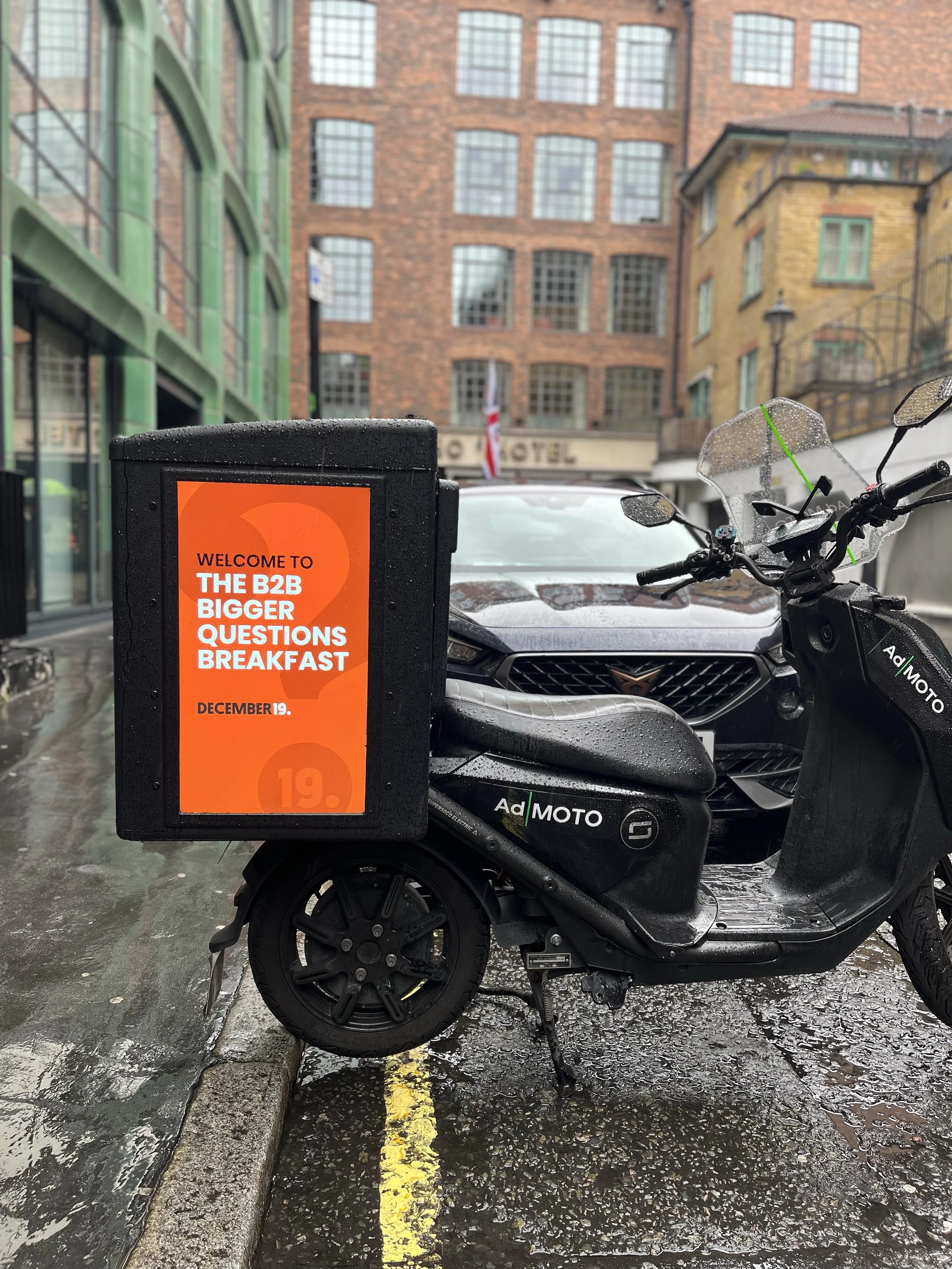
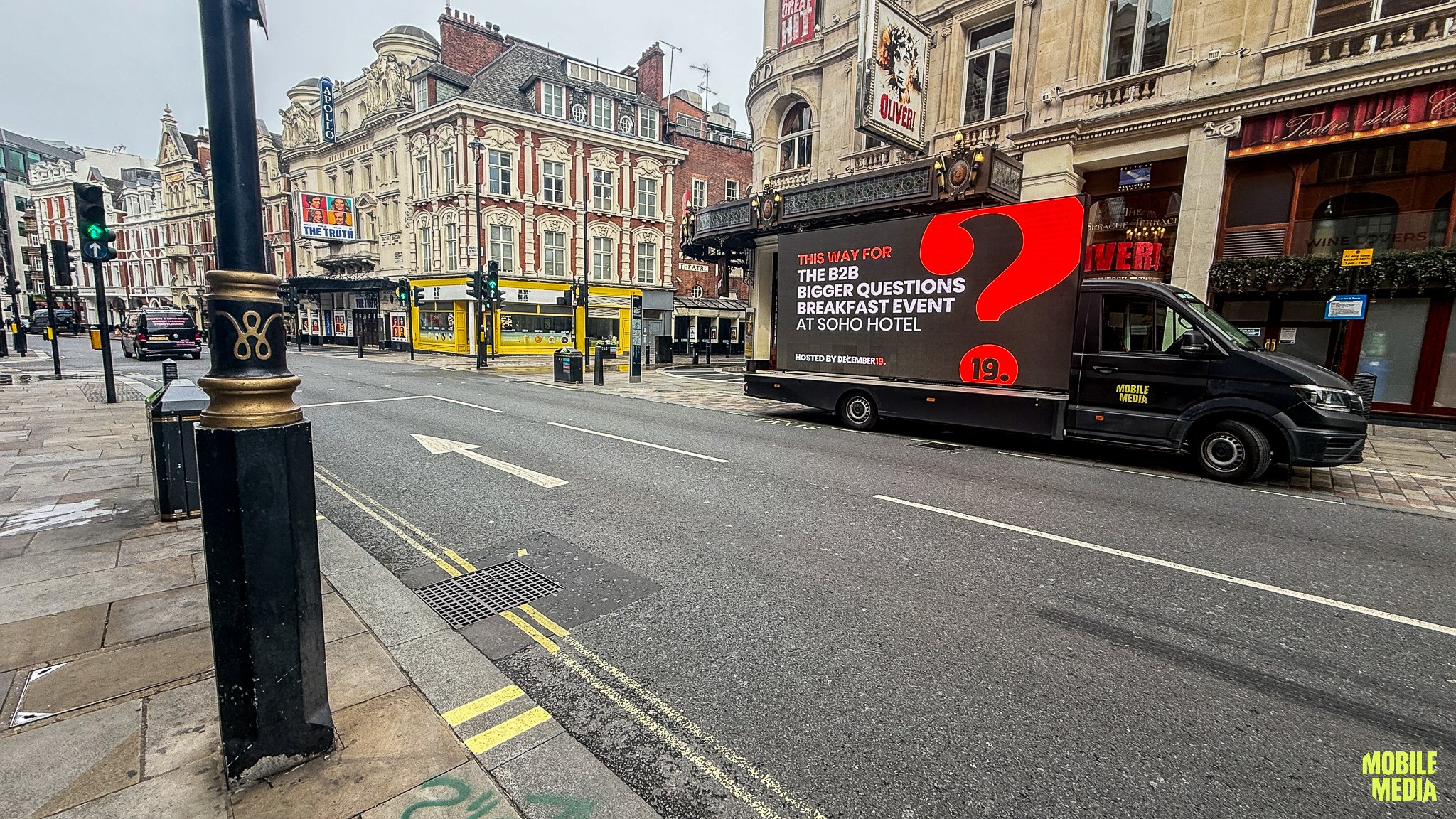

If everyone believes in influencer marketing for B2B, why is almost nobody spending on it?
That was the question on the table at our latest Bigger Questions Breakfast, and it came straight out of our own B2B Media Effectiveness Survey. When we asked senior B2B marketers where they saw the real opportunity, content creators and influencers came up again and again. Not as a future possibility. As something they believe in right now.
And yet almost no one is spending there.
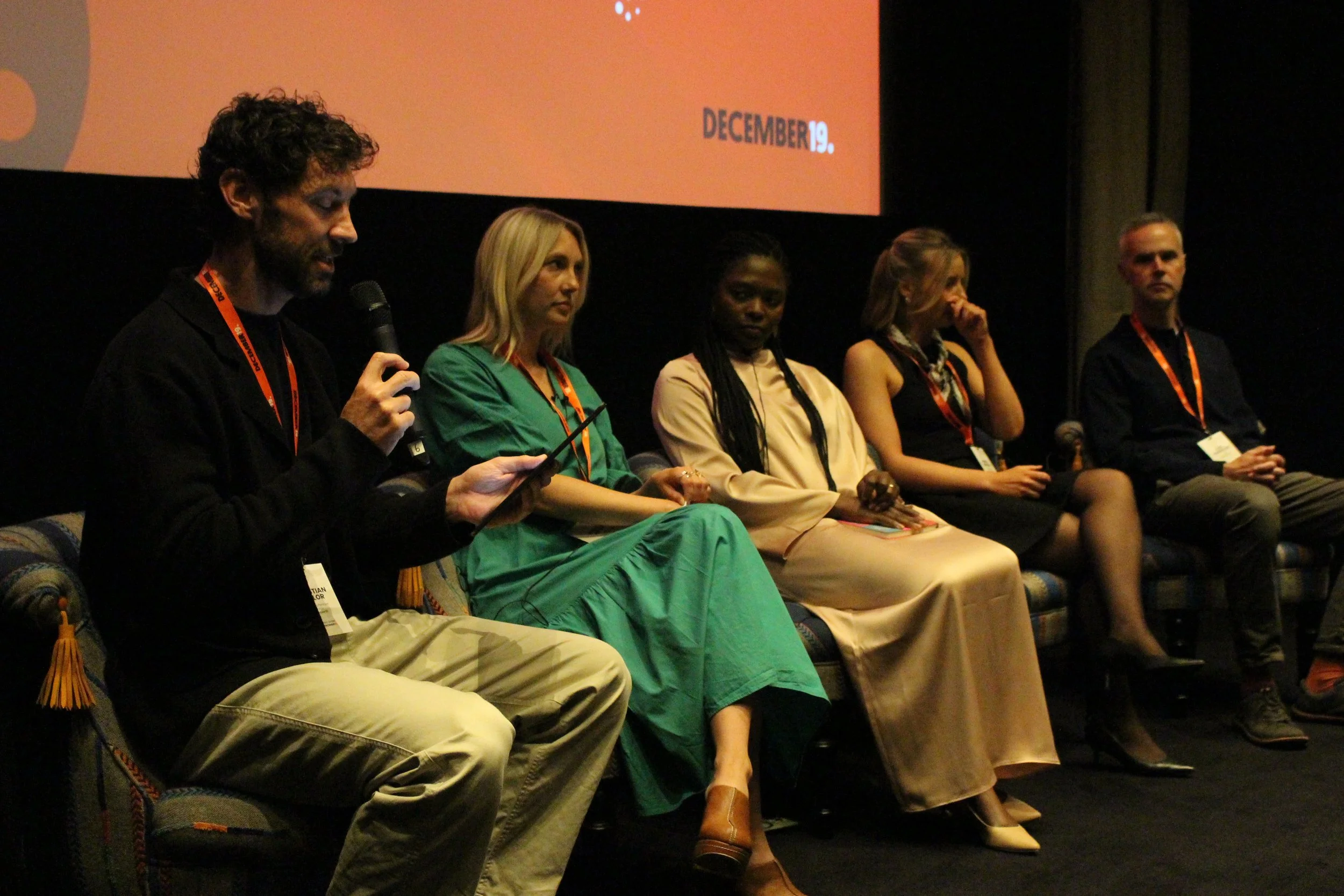
That gap between belief and behaviour is exactly the kind of tension we exist to interrogate. So we brought together four people who, between them, have worked every angle of it: Joel Harrison (Founder, B2B Marketing), Rida Oyebade, Robyn Hartley (Founder, Paper Kite Media) and Kristen Sesto (Co-Founder, Custom Influence), in conversation with our own Christian Taylor, asking: how do we move influencer and creator marketing in B2B from an experiment on the edge of the plan to a legitimate, measurable channel that drives pipeline?
Ahead of the panel, we sat down with each speaker to ask the bigger questions one-to-one. The results are captured below and the panel itself didn't disappoint. Here's what stayed with us.
Start with the trust problem, not the channel
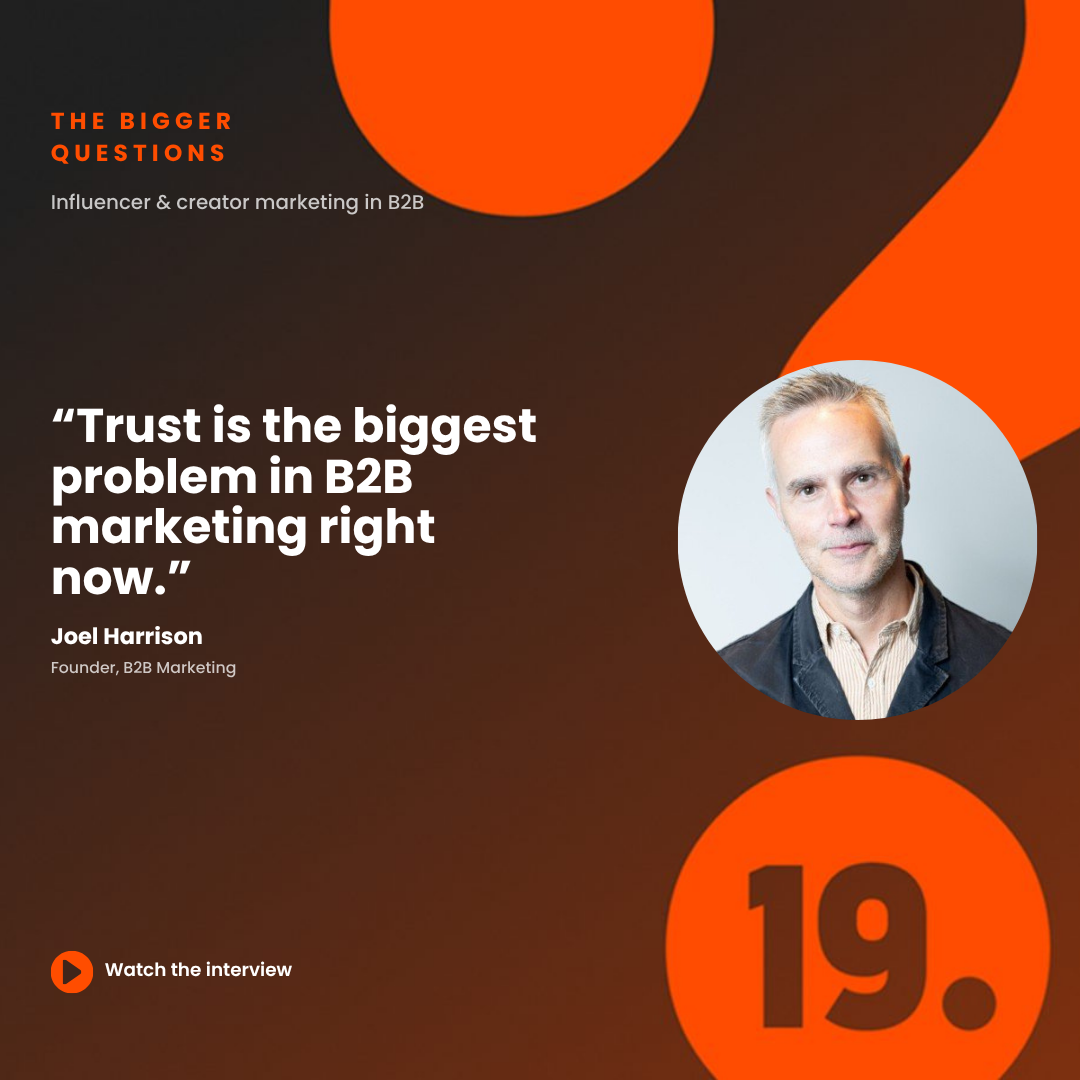
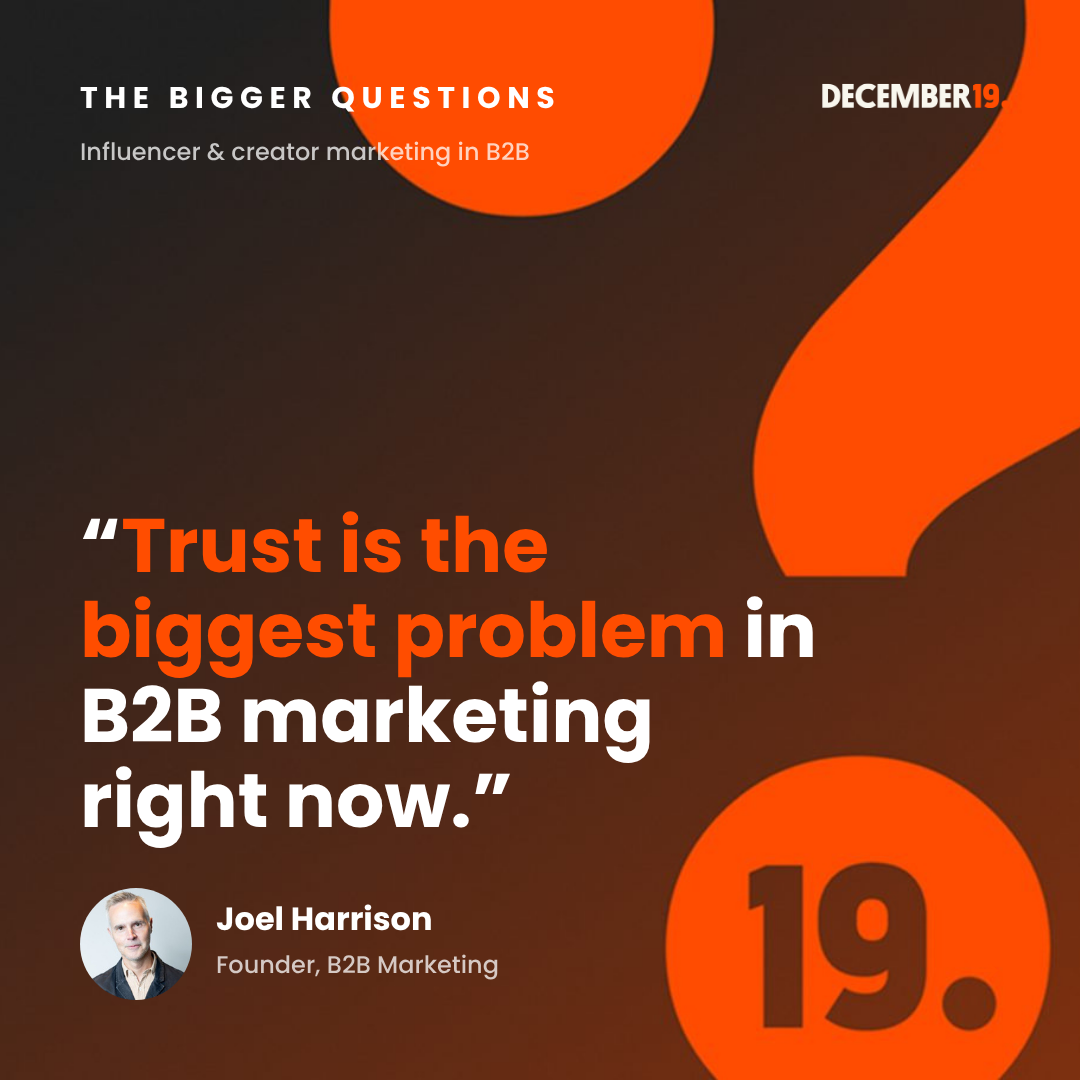
Joel Harrison's framing set the tone for the morning: "Trust is the biggest problem in B2B marketing right now."
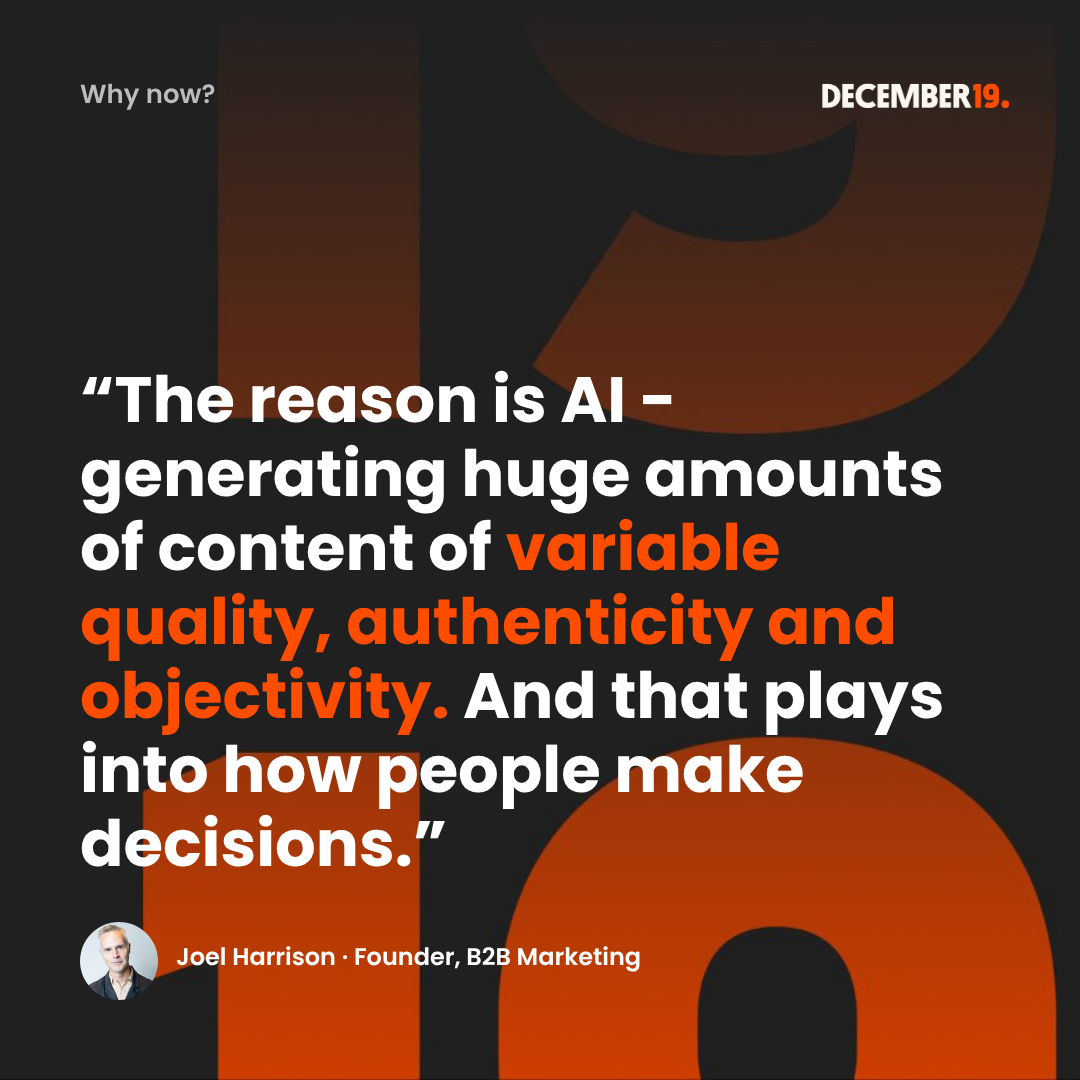
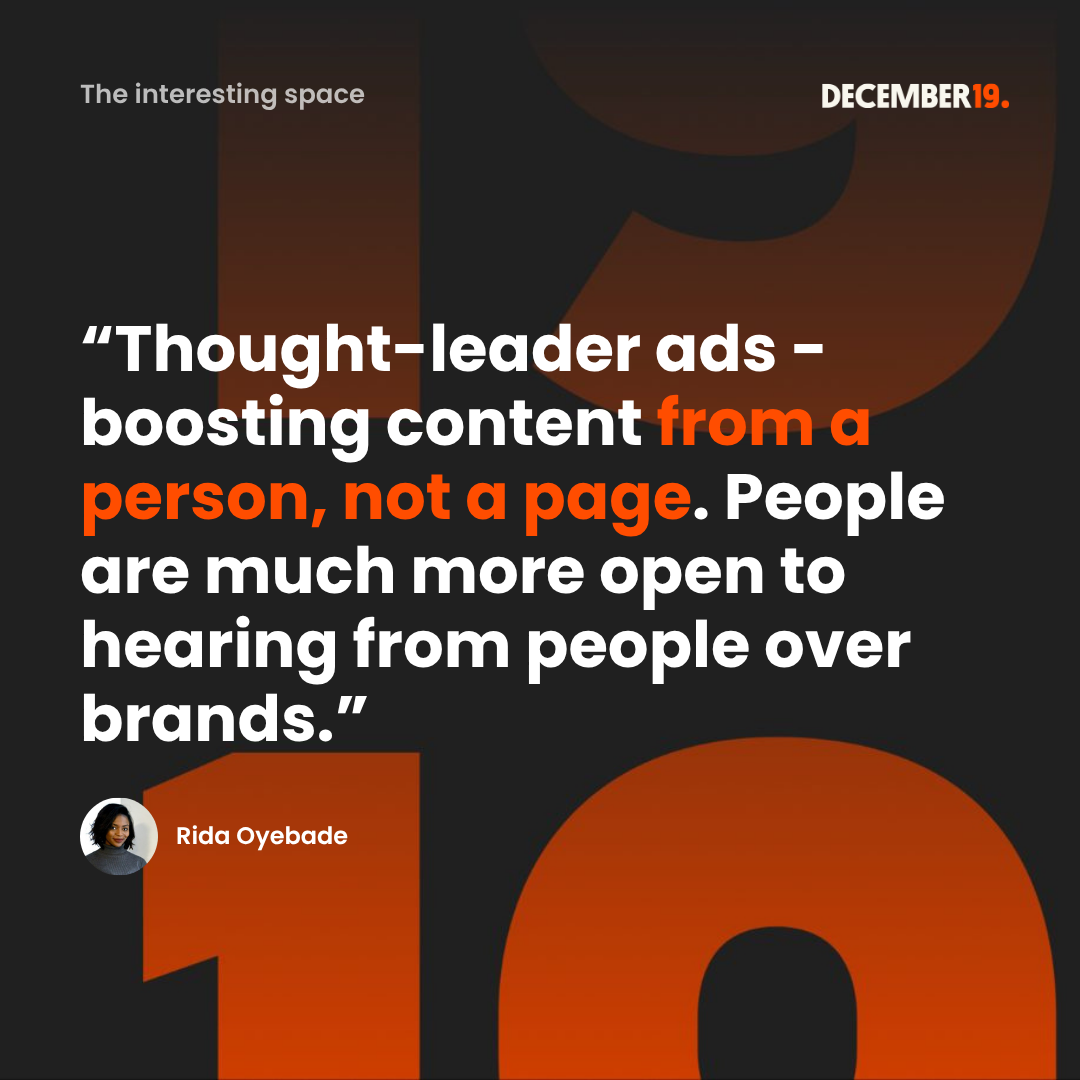
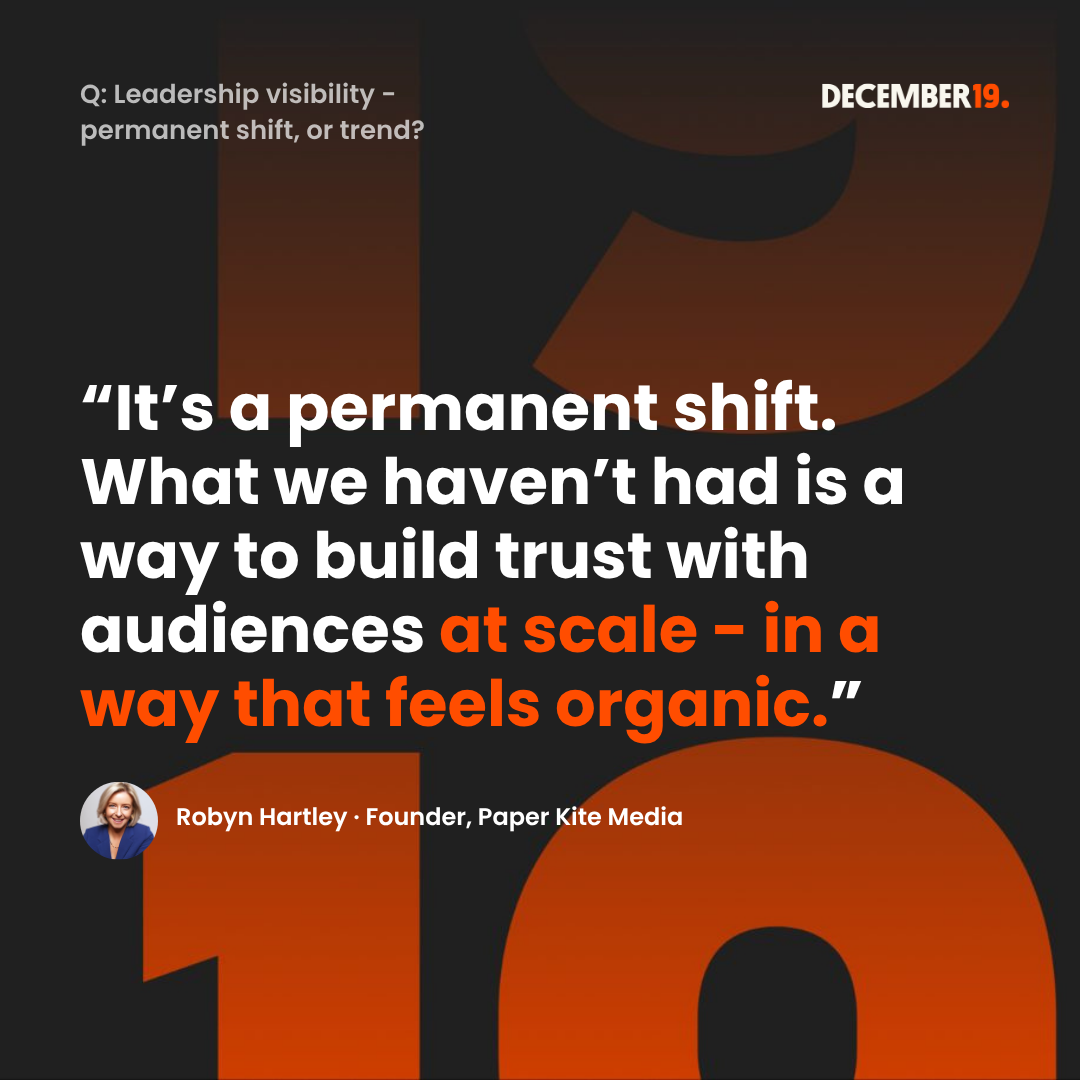
His argument is that AI is flooding the market with content of variable quality, authenticity and objectivity and that buyers are responding by putting their trust in people, not pages.
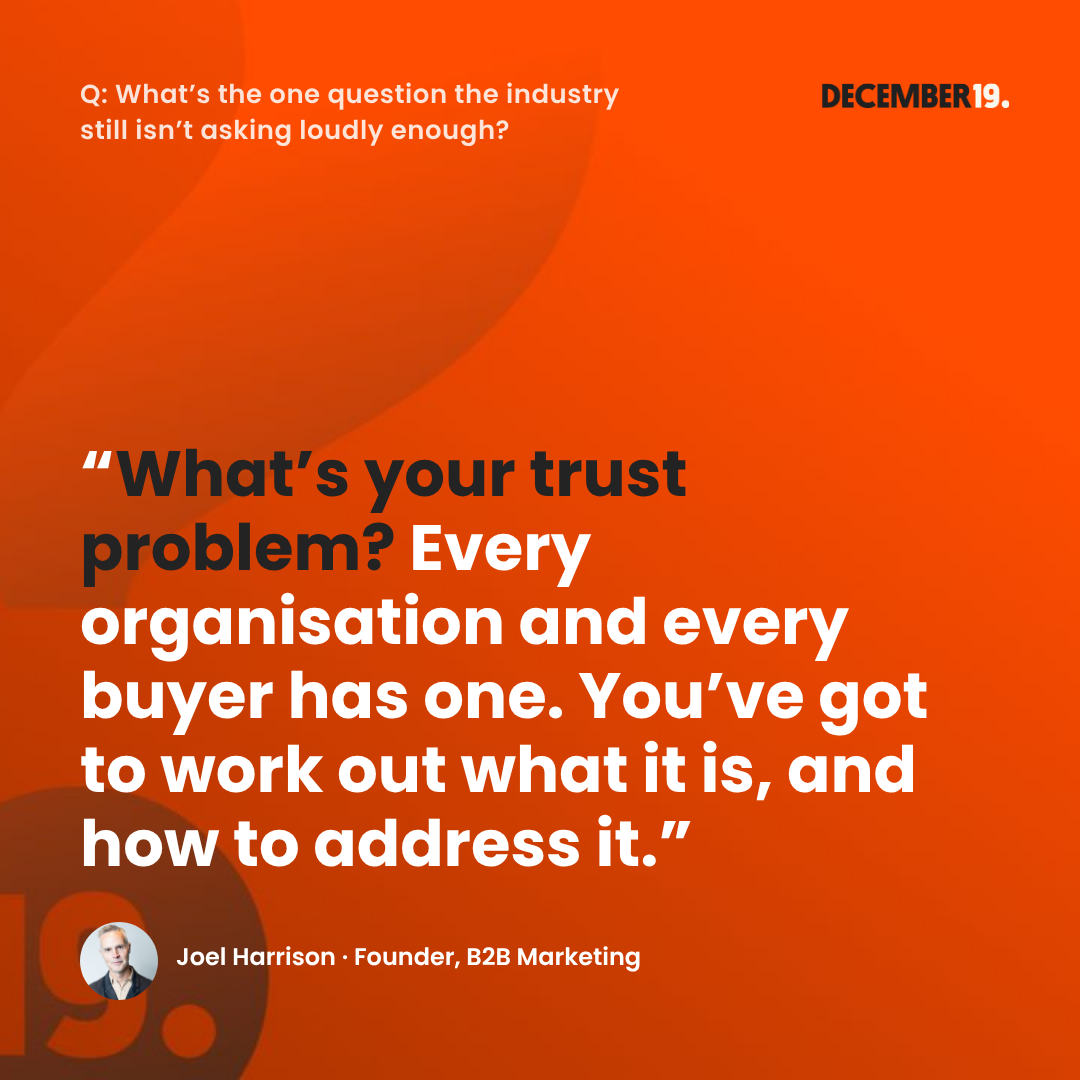
His challenge to the room: "What's your trust problem? Every organisation and every buyer has one. You've got to work out what it is, and how to address it."
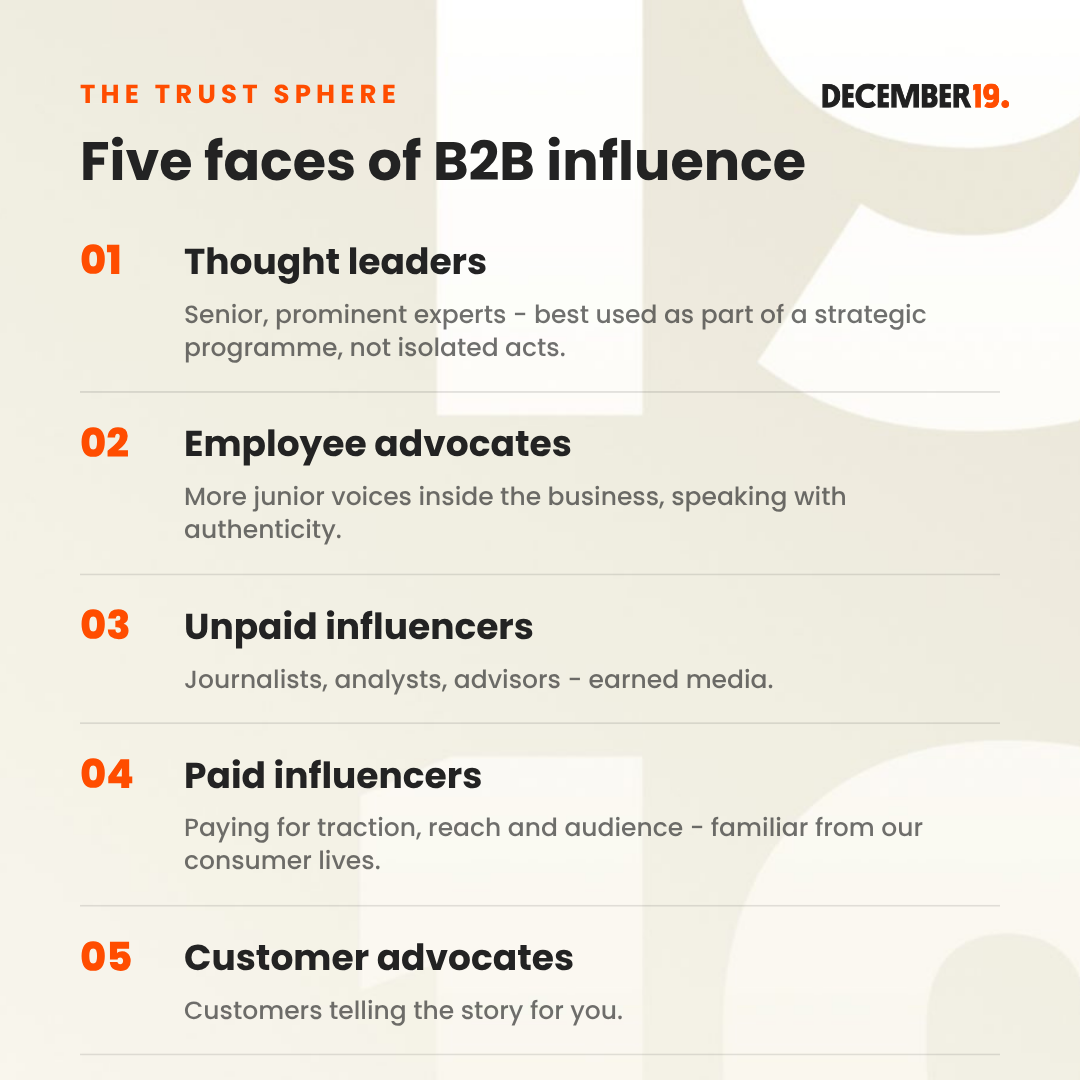
On the panel, Joel mapped what he calls the trust sphere - five faces of B2B influence spanning thought leaders, employee advocates, unpaid influencers, paid influencers and customer advocates.
"Five trust champions, all extraordinarily valuable, all playing a great role across different parts of the buying journey."
Organic reach is dying. Your people aren't.
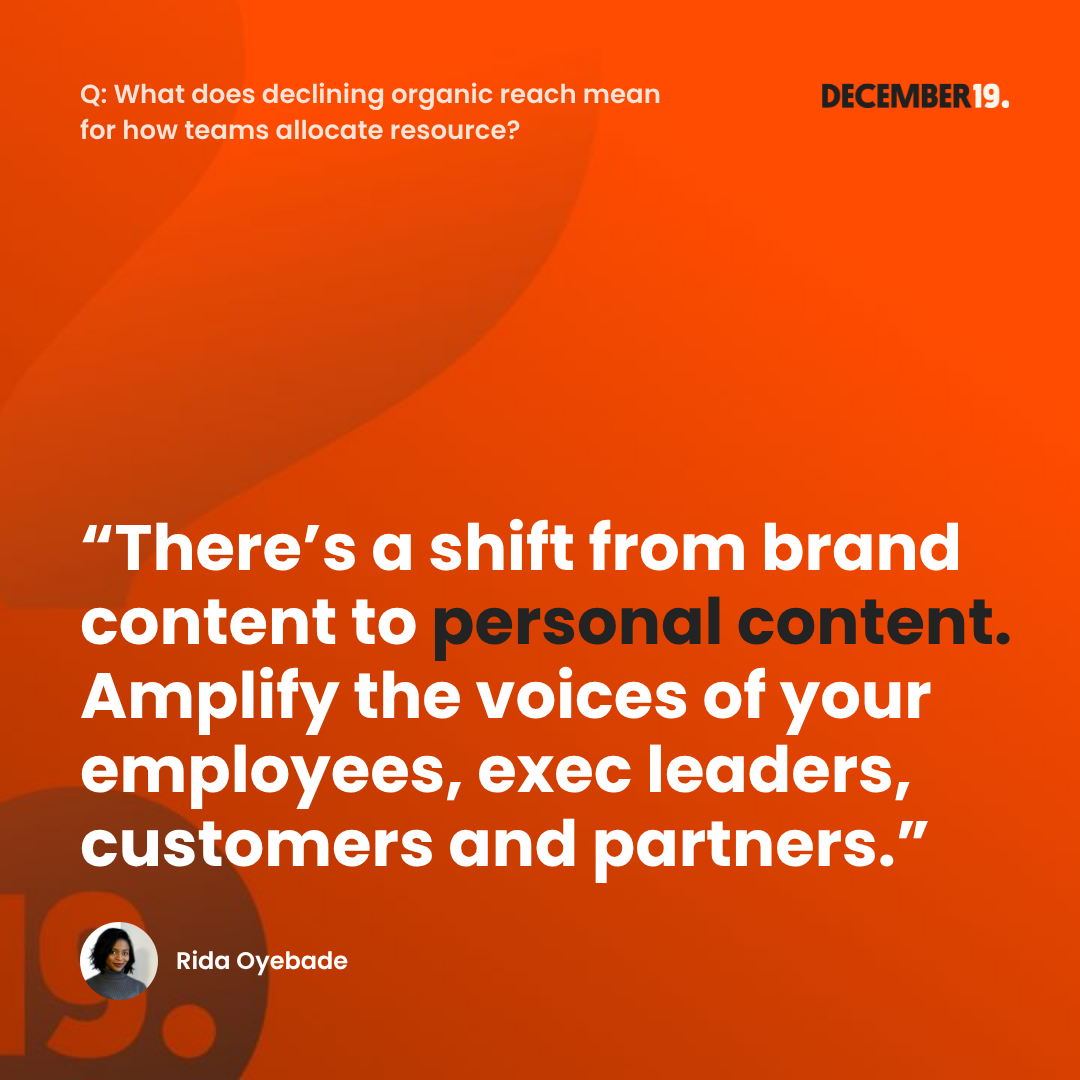
Rida Oyebade brought the platform reality with numbers that made the room sit up. "We amplified our employees. Our share of voice in the UK was around 13%. Once we amplified them, we had an additional 8% share of voice."
Her explanation is structural, not cyclical: the algorithm has shifted from social graph to interest graph. "Followers and follow counts don't actually matter now… That person who had 18,000 impressions only had around 1,000 followers. Things are changing."
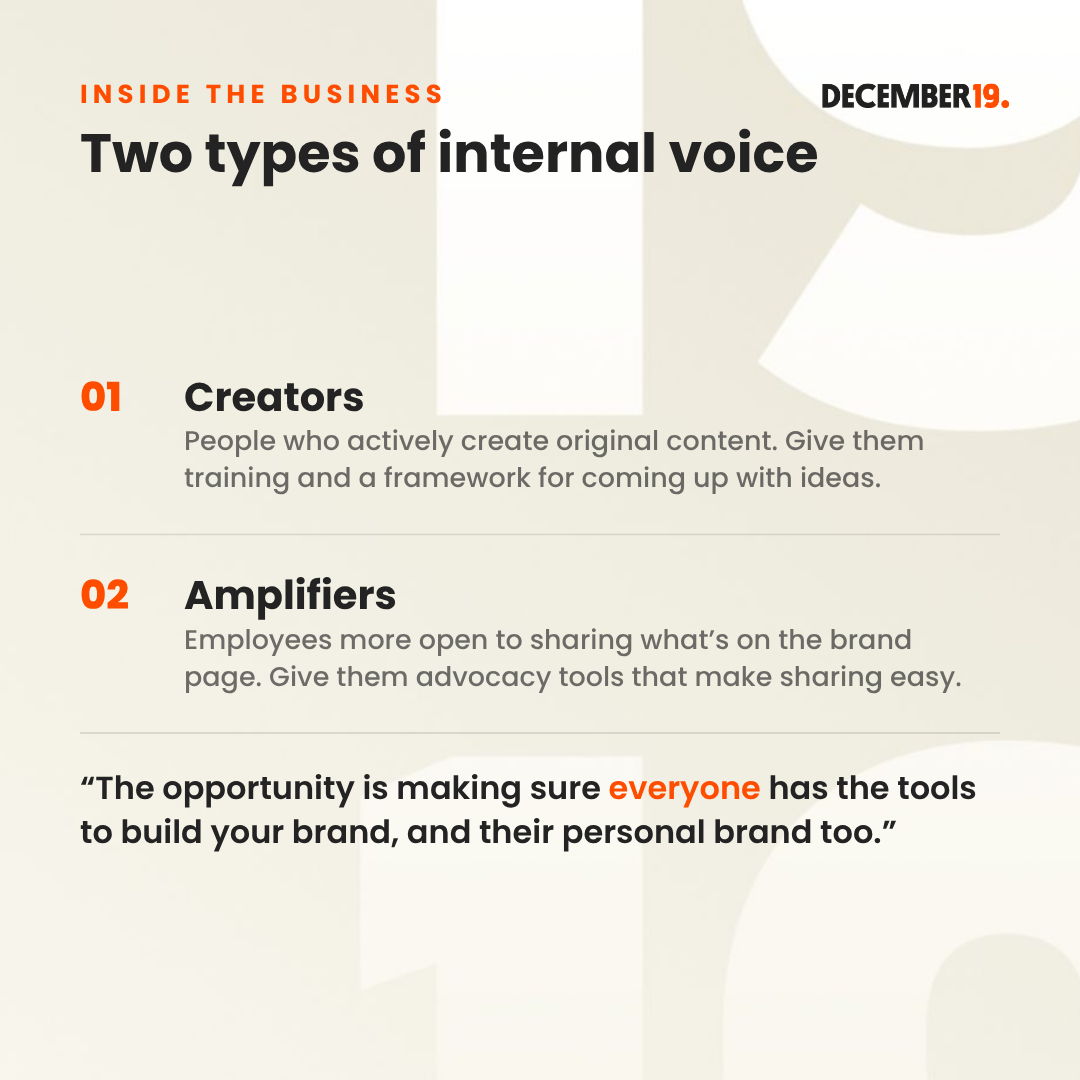
And her most counterintuitive insight was that the best internal creators often aren't the most senior people.
"I've seen amazing content come from the solutions consultants. They're the people talking to the clients - they have the knowledge."
Internal and external voices: complement, not compete
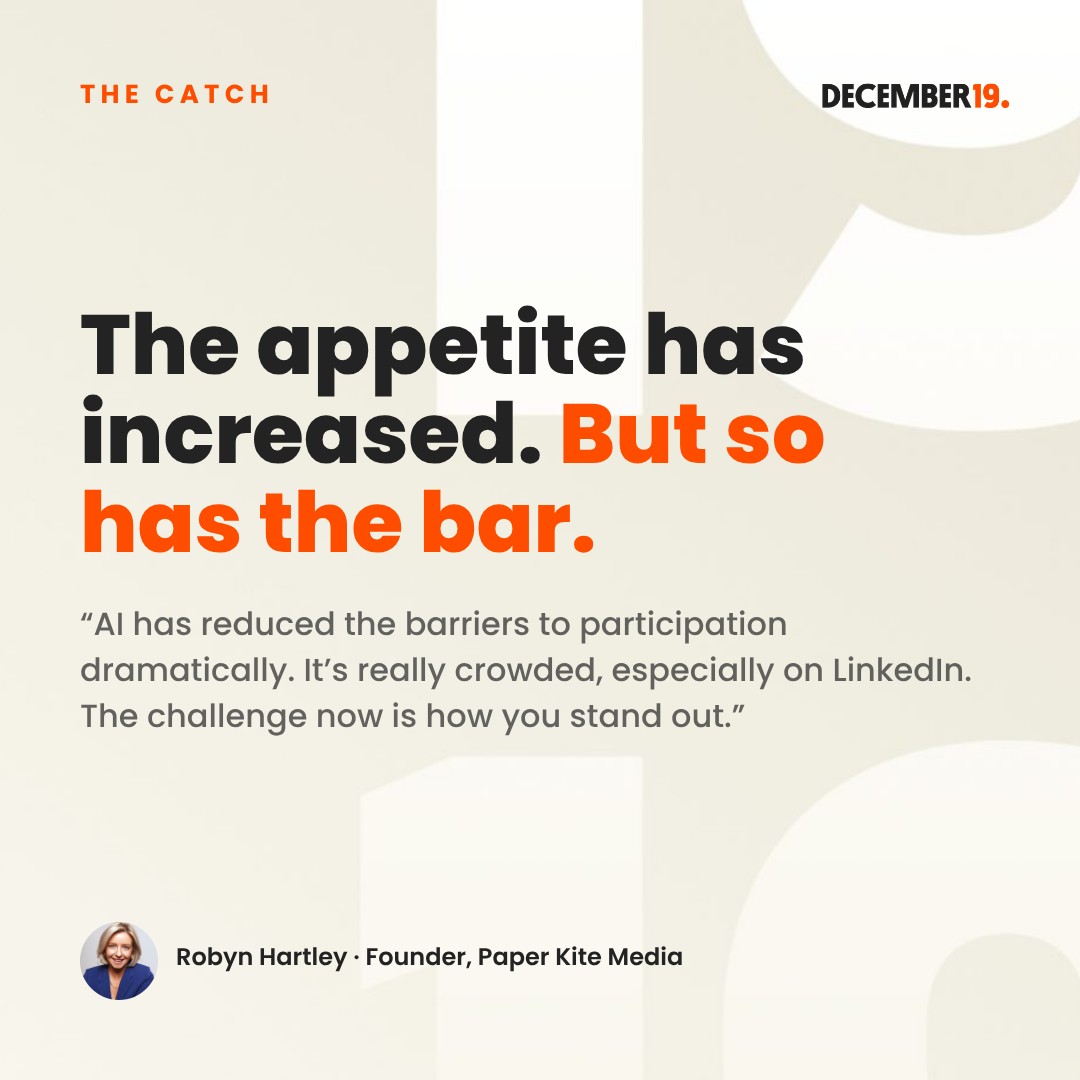
Robyn Hartley made the case that employee advocacy has moved from add-on to growth driver. "The appetite for employee advocacy has increased dramatically in the last 12 months - in awareness of how powerful it is, and in real commercial investment."
But she was equally clear that internal and external influence shouldn't be fighting for the same budget line: "They shouldn't ever compete. They should always complement each other, and if you intentionally combine them into an integrated strategy, it can be really effective and have a lot of commercial impact."
Follower counts are a vanity metric
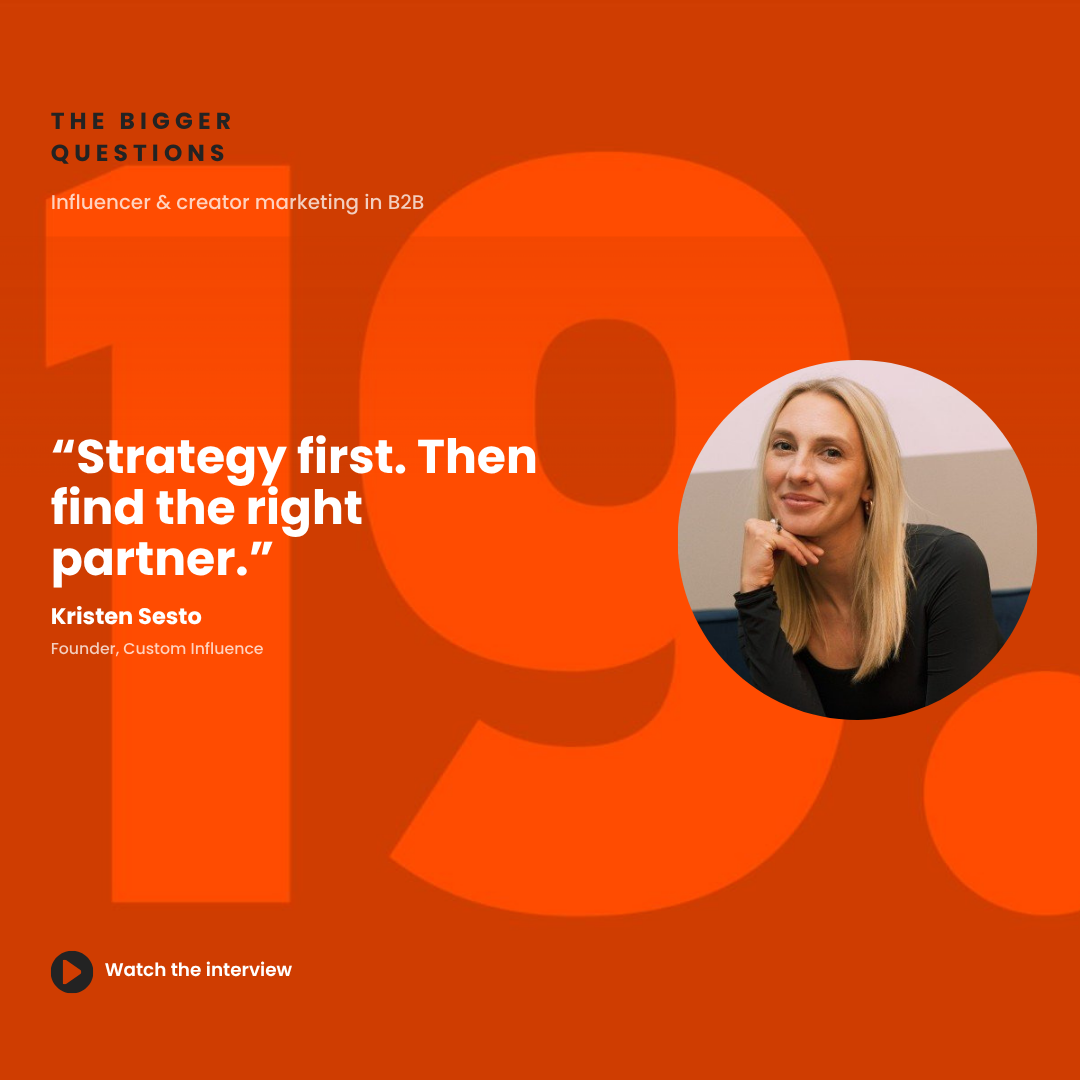
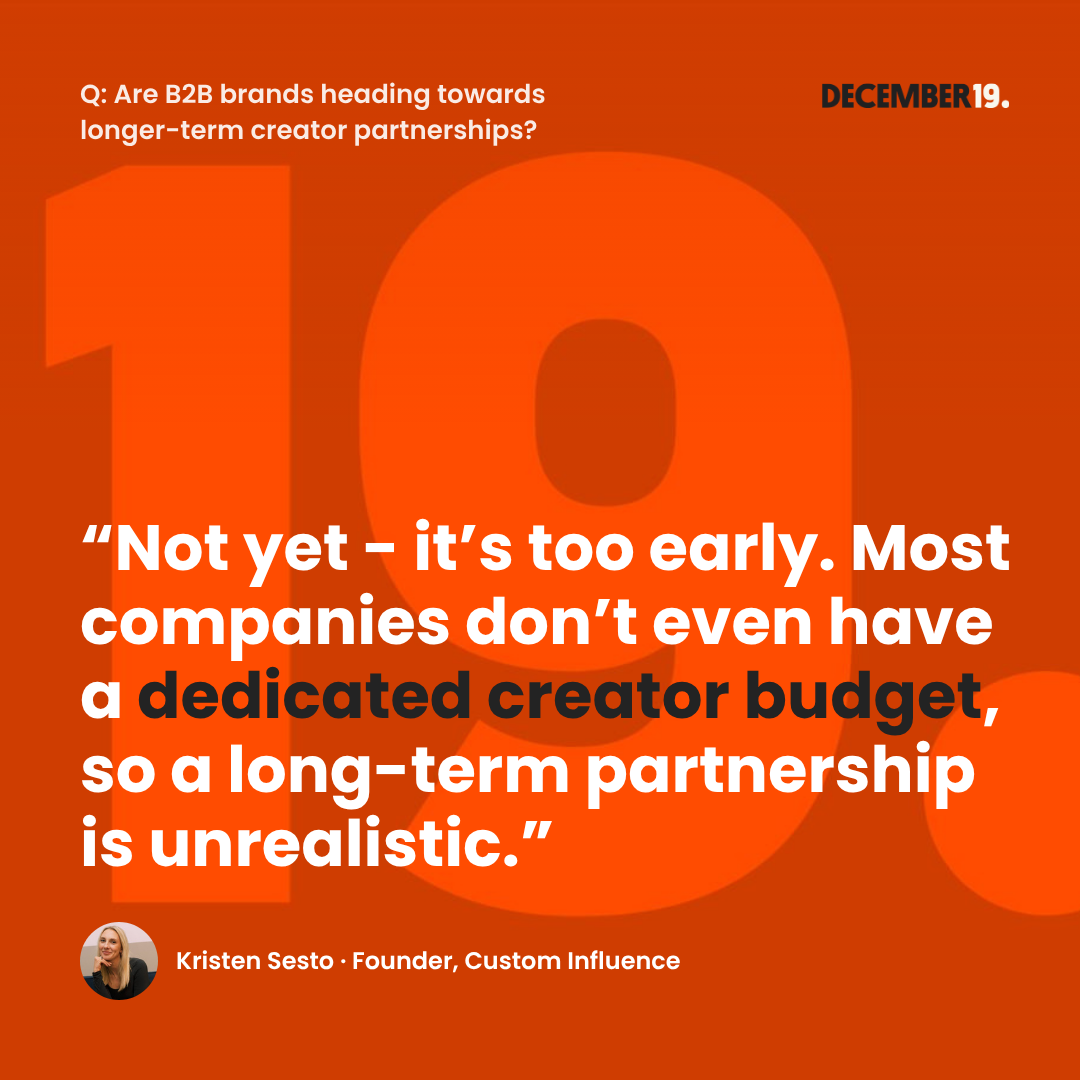
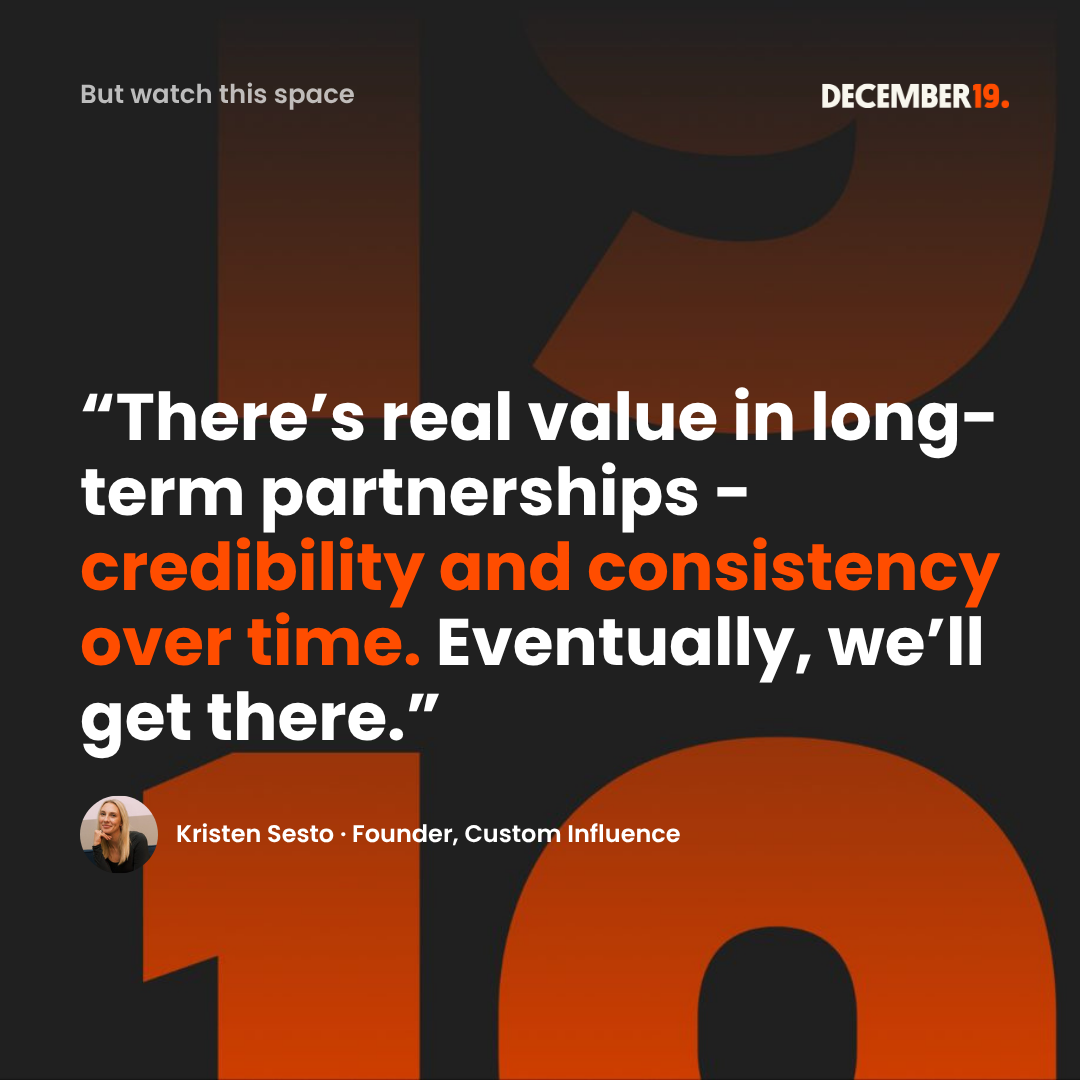
Kristen Sesto dismantled the objection we hear most often - that influencer marketing only works for tangible, consumer-adjacent products, with real enterprise SaaS campaign examples. And she took aim at how the industry prices partnerships: "Most of my clients still think the price of a partnership should directly correlate to somebody's following. That could not be further from the truth. The metric for evaluating potential reach is average views, not follower count."
Robyn put it even more vividly: "You'll have someone with 823 followers, and it's bang on, full of heads of department, directors, everyone within their ICP."
Or, as Joel summarised: "B2B is a meritocracy. Which is a nice thing."
The one thing to do this week
We closed by asking each panelist for the actual first move. The answers were unanimous in one respect: don't begin in isolation.
Kristen: Get the right people in the room and work out where influencers complement what you're already doing well.
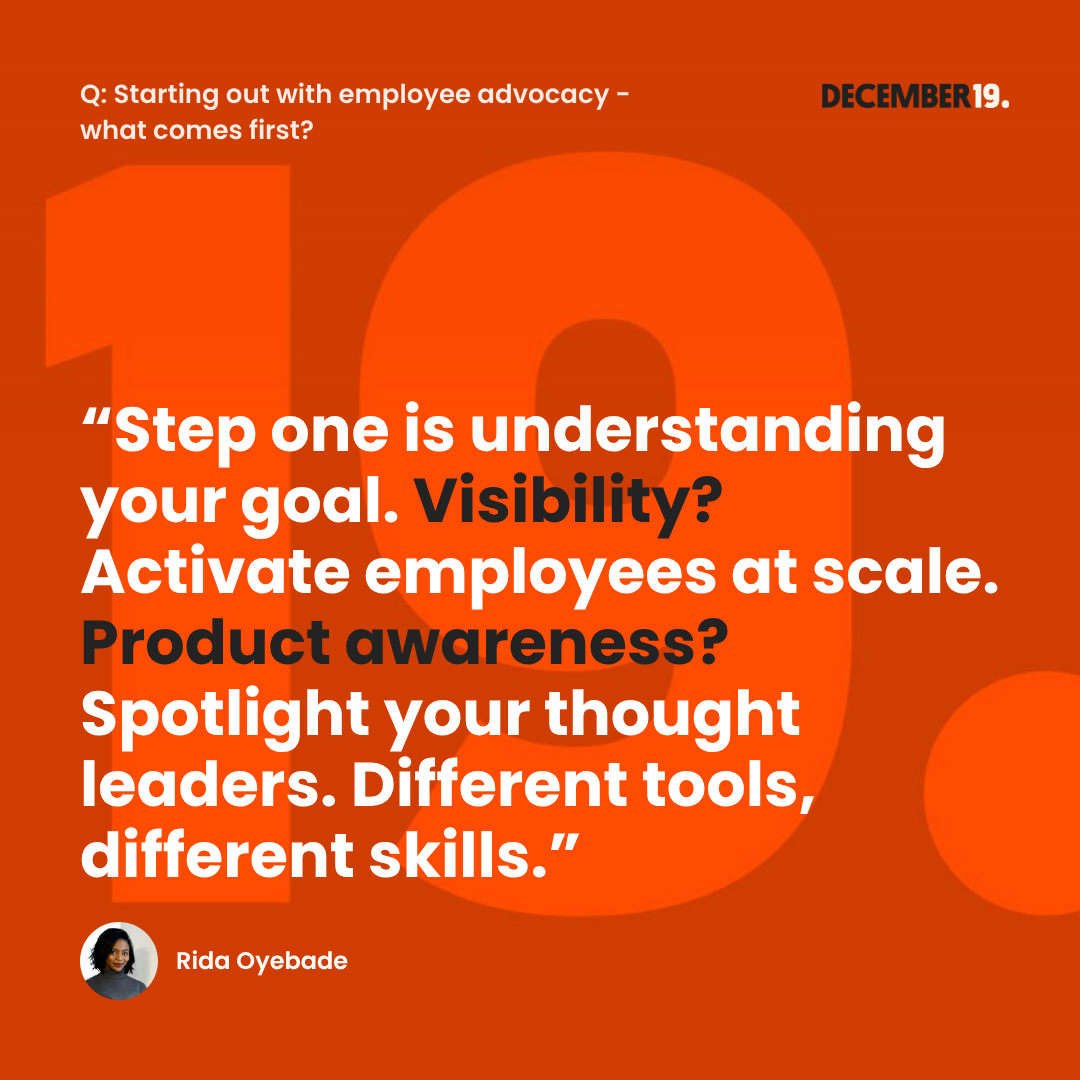
Rida: Speak to the sales team. They have the networks, and they know what buyers are actually asking.
Robyn: Work out what you're trying to achieve at a broader level, then activate the right voices with the right training.
Joel: Look at your trust challenge holistically, then build the solution around that.
The bigger question we're left with
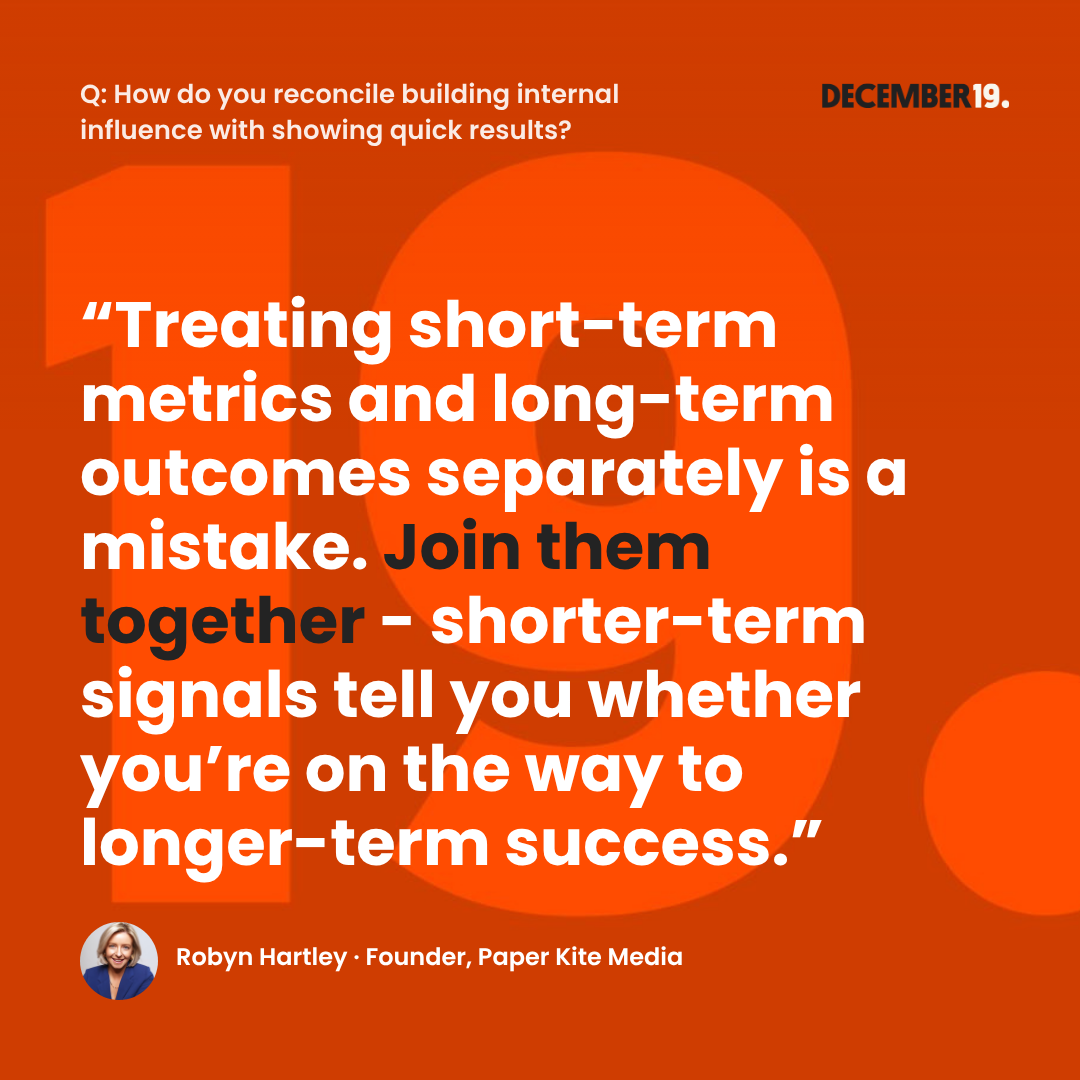
Measurement came up, as it always does. Robyn's answer reframed it: "There's no silver bullet… But we can build a strong bank of evidence enough to make confident decisions." Which prompts the question every marketer in the room took home:
Are you waiting for perfect attribution, or building the evidence to act with confidence?