
When every brand can access the same data, the advantage lies in the question the algorithm wouldn't know to ask, writes December19's Poem Barber.
One number in WARC's Future of Strategy 2026 report, released last month, piqued my interest. Last year, 35% of strategists said they did in-person research at least monthly. This year it's down to 23%.
In the same survey, 55% of us say AI will refocus strategy on human perspectives. So, we believe people matter more than ever, and yet we're spending less time with them.
I understand why. AI-generated synthetic audiences, in particular, give us answers faster than ever. But an answer is only as good as the question behind it, and the questions worth asking still come from real life. If AI is giving us time back (and 65% of strategists say it is) we should be spending it with people.
December19’s recent work launching Shin Ramyun in the UK is the best example I have of why.

The easy answer
When South Korean instant noodle brand Nongshim Shin Ramyun handed us a brief in late 2025, their objectives were clear: build awareness of Korea's No.1 noodle brand fast, grow the UK as a key European market, and lead the K-food trend.
The data pointed one way. K-food is booming. K-pop and K-drama are mainstream, as evidenced by the release of KPop Demon Hunters in October of 2025 - the Korean fantasy movie that came from nowhere to become Netflix’s most-watched film ever. The obvious route was to lean into Korean culture and ride the wave.
But every Korean food brand in the UK could see the same trend. And jumping on the Korean ‘bandwagon’ would have made Shin Ramyun one of many. It's exactly the kind of answer WARC's respondents worry about: 61% say AI's biggest limitation is a lack of originality, and 57% say a lack of cultural nuance.
Home time is sacred
So, instead of asking AI what's trending in Korea, we asked ourselves and those around us: when do people in the UK most want a bowl of something hot and spicy?
The answer came back loud and clear - it was home time. The sacred end-of-day that acts like an emotional exhale: the unlocking of the front door, the rain-soaked commute ending, the post-pub hunger kicking in, the Friday night in replacing the night out.
No trend report would have handed us that. It isn't a data point. It's a feeling most British people would recognise in a second, and a moment we believed Shin Ramyun could own.
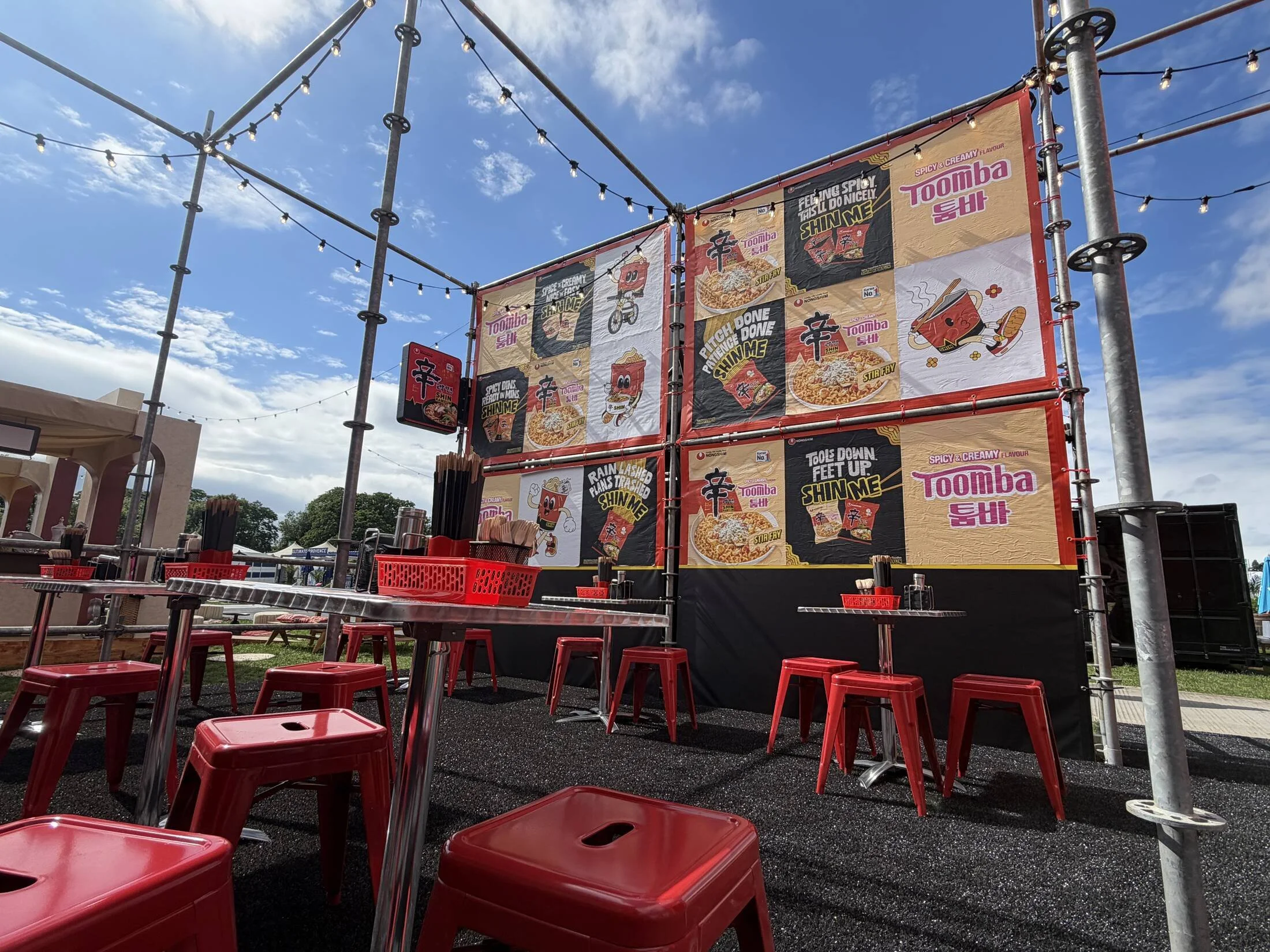
It also gave Nongshim's global platform, Spicy Happiness in Noodles, a British home. Home time became the moment for Spicy Happiness, and the UK line became SHIN ME: Shin Ramyun as the end-of-day dinner.
The Martin Agency's Elizabeth Paul puts it well in the WARC report: "Ask the question the algorithm wouldn't know to ask."
From insight to media
As a media agency, an insight only matters if it changes where and when a brand shows up. And this one changed pretty much everything.
We also had a constraint. Restrictions on food advertising across London's transport network ruled out many of the formats you'd normally reach for, from tube takeovers to sites near schools, and left few options in central hotspots like Covent Garden, King's Cross and Shoreditch.
We couldn't buy the London everyone else buys, so we had to find a moment no one else owned. Rather than planning by channel, we planned by moment and made the brand part of the city.
It played out across three London moments, each telling the same story:
• Shin Ramyun on the Piccadilly Lights over Christmas, with sampling in the square below.
• A Spicy Happiness reset at Taste of London, with SHIN ME digital vans taking the line across the city.
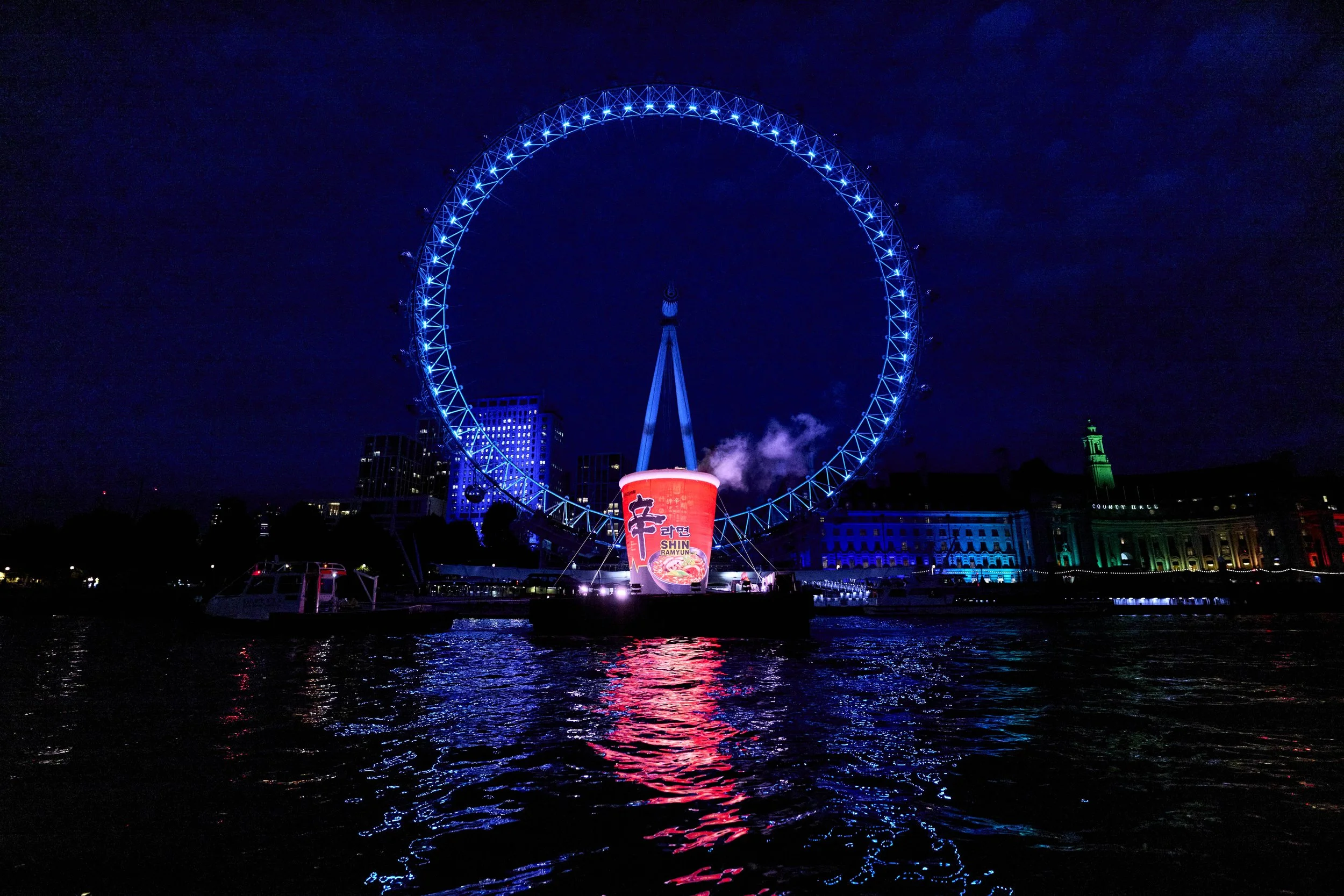
• A six-metre steaming cup of Shin Ramyun sailing the Thames on the evening commute, past Tower Bridge, the London Eye and Big Ben.
The Thames moment is the clearest expression of the idea, as we put a steaming bowl of dinner on the river at the exact time London was heading home.
As Simon Carr of Hearts United says in the WARC report, "As reach becomes more universally available, quality attention becomes a more important source of competitive advantage and a critical driver of effectiveness."
What it means for strategy
WARC calls strategists the "guardians of reality". Here's how we took up the baton for the real world:
• Use AI to ‘clear the desk’, handling standard research. Then spend the time you save with real people.
• Look for the moment, not just the market. Category data tells you where the competition already is, while everyday life and the people around you tell you where it isn't.
• Let the insight shape the media, not just the message. Home time told us when to show up, and where.
Elizabeth Paul says AI "should give us the time to pursue more extraordinary truths with greater depth". The truths are still out there, on the commute, at the front door, in the queue for the chippy after last orders.
AI could have told us K-food was booming. It couldn't have told us what it feels like to get home on a wet Tuesday in November. That was the insight that put a steaming cup of noodles on the Thames, and it's the kind that strategy can't afford to stop looking for.
Poem Barber is Planning Director at December19.